Hollow Wood Boards
I made my first hollow wood boards from my home factory in 2002.
Hollow wood Surfboards
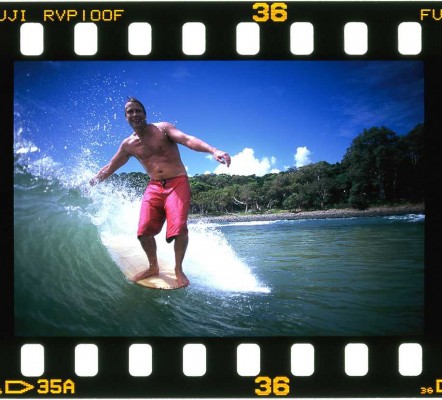
I have surfed wood surfboards for a long time. In 1981-82 I was riding three balsa longboards and I loved their glide and liveliness. Though they were heavy on land, they were quick and light in the water. By 2001 I had found that paulownia was the best wood for surfboards by a long shot. I was making foam boards for a living but dreaming about making wood boards. By 2003 I was making elegant hollow wood surfboards that had the same feel as the balsa years before. The boards were paulownia wood, hollow and glassed. I was very busy and made 201 of this type of board.
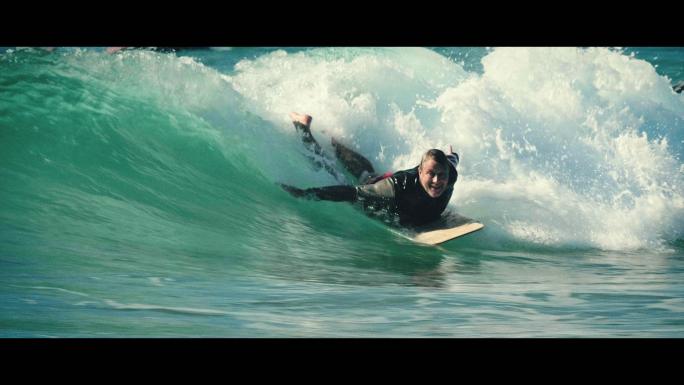
This video shows my feeling towards the hollow wood board better than any words. Nathan Oldfield made it in 2003 and it was part of his first masterpiece film, 'Lines from a Poem'.
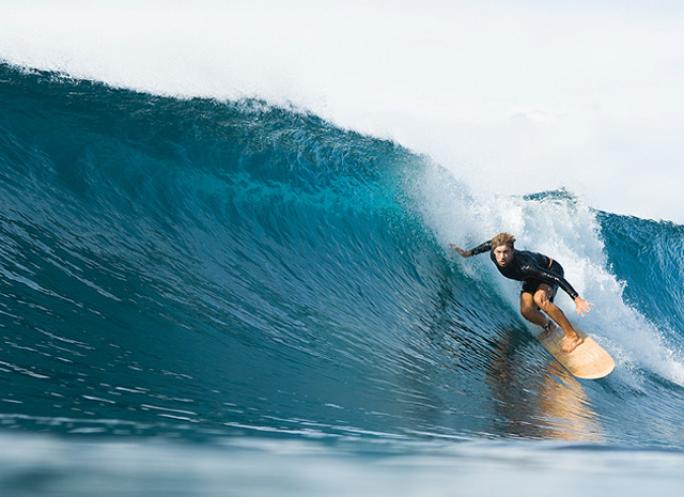
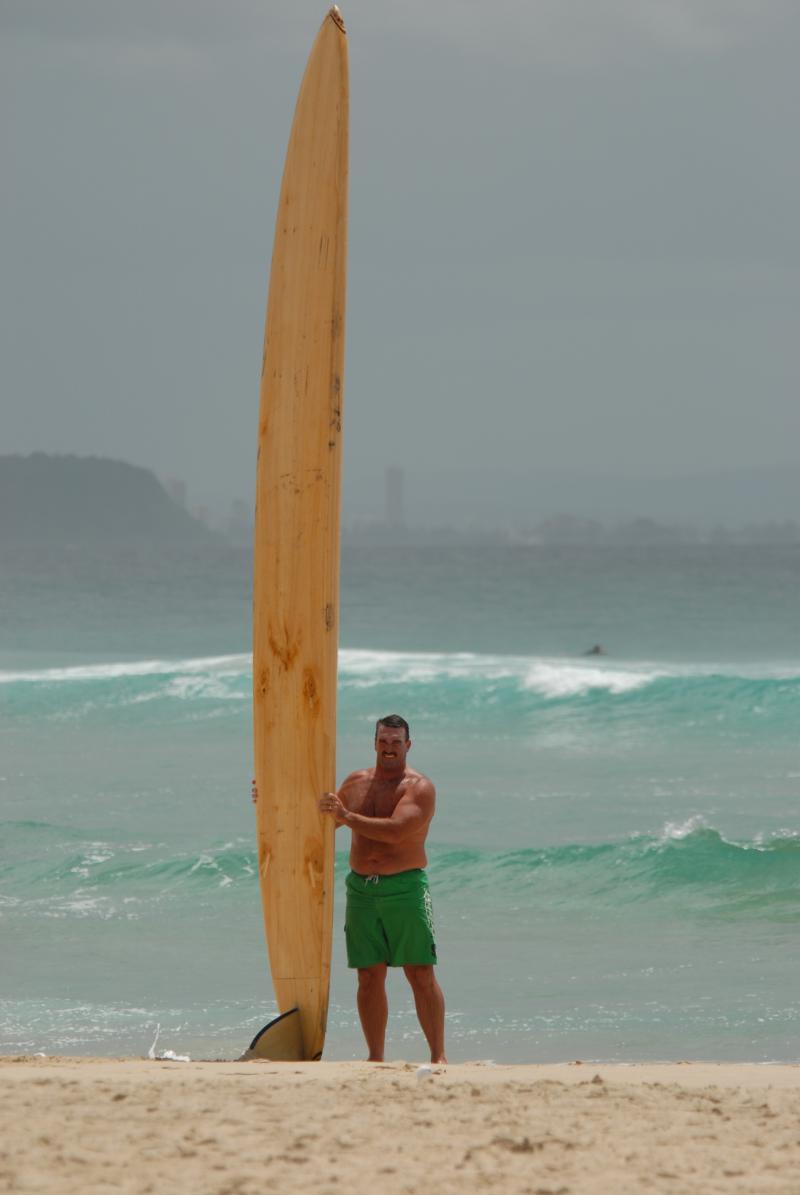
We also featured in a segment in Thomas Campbell’s revolutionary film, Sprout. These two films went on to jump start the wooden surfboard movement around the world and brought many of the wood board builders together, whilst inspiring many more to come.One of the great side projects that my hollow wood construction made possible was the big boards. Working with my top team rider Cameron Byram we mastered the 12 to 18 foot realm of the finned surfboard. We found that 12 foot is actually the mid-length for a longboard and it was very easy to surf once you got over the shock of being on such a big board.
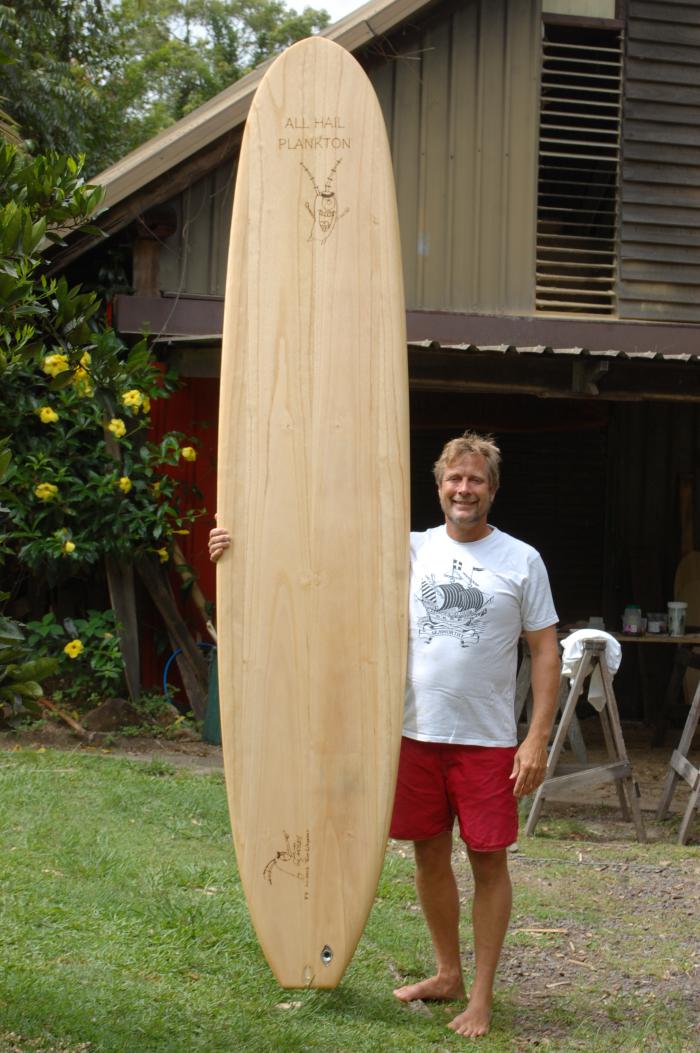
As I mastered my process for making the boards and the paulownia suppliers were getting better at milling the wood, I found that I did not have to glass the boards any more. I could make a hollow, water tight board that did not need a coat of fibreglass to keep the water out. I sealed the wood with linseed oil. I called these boards “Plankton” after the character on Sponge Bob Square Pants, which the family was really into at the time. The oiled surfboard has some very special qualities. First, the oiled surface is very fast in the water. There is little surface tension and the board actually feels slippery in the water. Second, the boards are lighter so they are easier to carry around on land. Third, the board is a very green product.
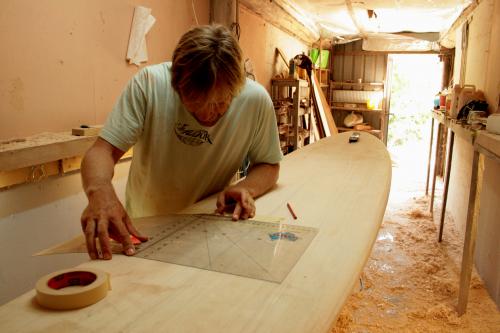 There are almost no resins or toxic materials in the making of the board. I have made about fifty of these boards ranging from fish and eggs shapes to noseriders and tunas. There is one catch to the Planktons; they need care. You have to take the bung out of the board when you are not surfing it or the air may expand in the board and may cause a crack. They can mould and should be kept inside. They need to be oiled ever six or so surfs. But if you follow simple instructions you will have the best board on the planet.