30 August 2011
Wood Bellyboards: English and Japanese
Maximum enjoyment from the little wood bellyboard.
By Tom Wegener
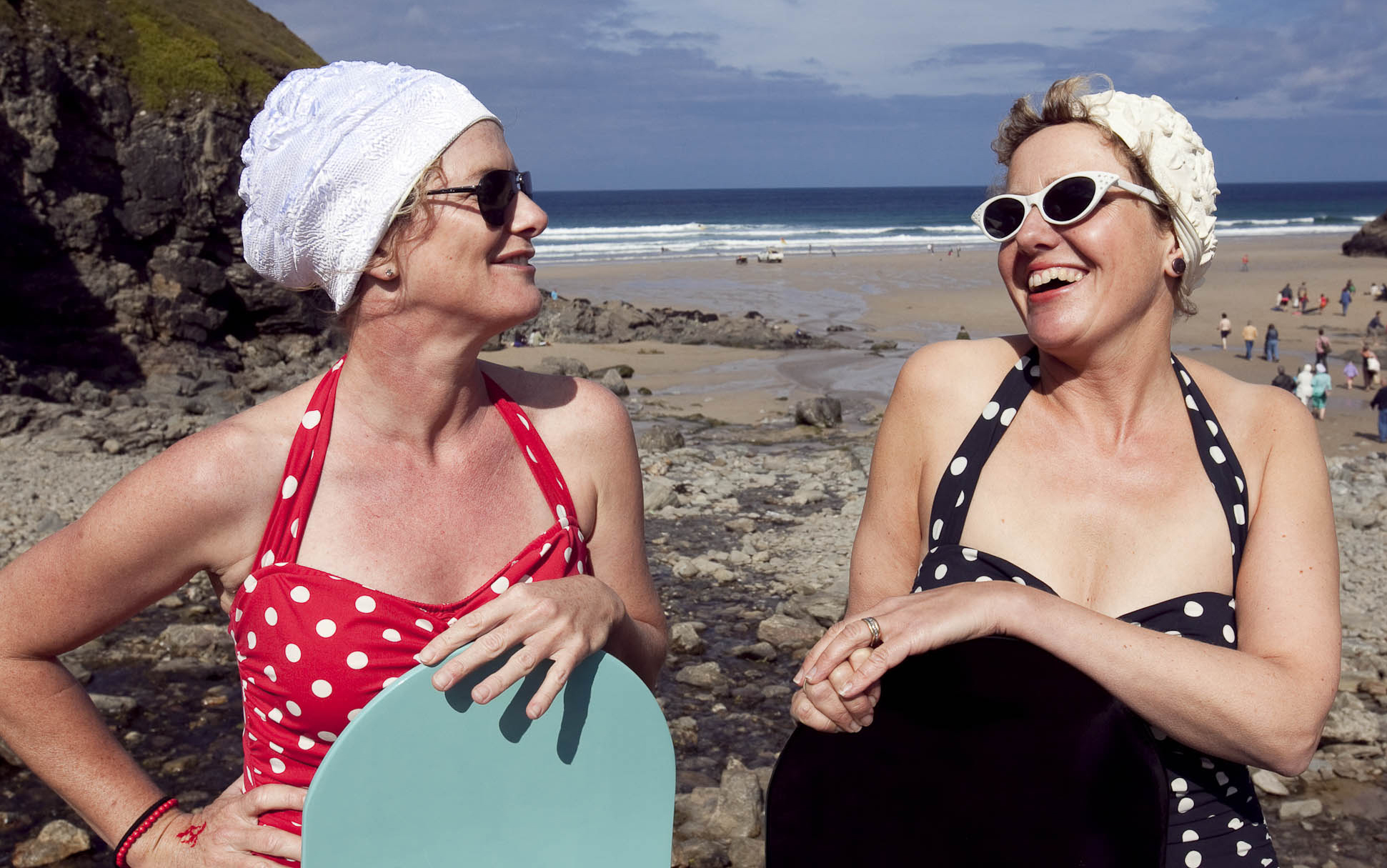
Some people may think that I have lost my mind with this post, but it is the opposite. This is fundamental wave enjoyment with a very complex board. Just wading out into the water and jumping on little waves is a lot of fun and the best way to share your surfing experience with others, regardless of their surfing ability.
It is the masterful design of the board that makes it so much fun. This entry is dedicated to Sally Parkin (pictured above with Margie). Sally has been the main engine driving the resurgence of the little wood surfboard or bellyboard (though she does not like that name). Sally lives in the UK and makes Original Surfboards, inspired by the surfboards she grew up surfing in Cornwall.
She has recently discovered that the origin of the body board with the lifted nose may actually be South Africa which may be a bombshell to surfing history.
I was first introduced to the wood body board in about 2008 when John Isaac of Revolver Surf Shop in Cornwall sent me a board made in the 1940s. I was in the middle of the alaia fever and seeing that this board revolved around flex to ride the wave, completely blew my mind. Then Christiaan Bailey made a great little film on Dot, a core surfer who had been surfing the boards far longer than most surfers have been alive.This shows that the surfing world is much bigger than I ever imagined a few years before. If you have never tried one of these boards, please do yourself a favour and give one a try!
Note: Nobby went back to Japan and looked into the Itako board and found that there were thousands of them all over Japan. He uncovered a huge part of Japanese surfing culture that had been forgotten